
No products
Prices are tax included
Artemias and hatchers
- Basins
- Air Liquide
- Aquarium Hobby
- Dogs
- Cats
- Birds

Viewed products
-

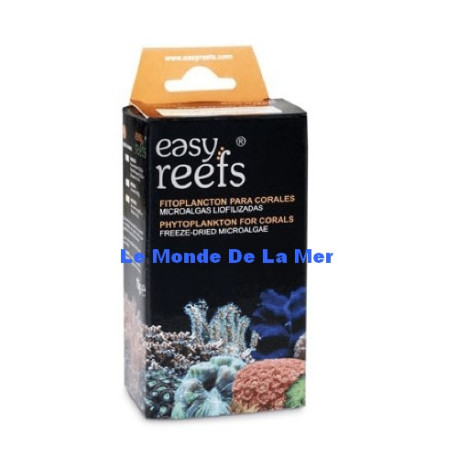
Easy reefs Corales...
Easy Reefs® Artemia has been...
-

PGC Medium Cleaning...
Power Gravel Cleaner Medium Cleaning...
 View larger
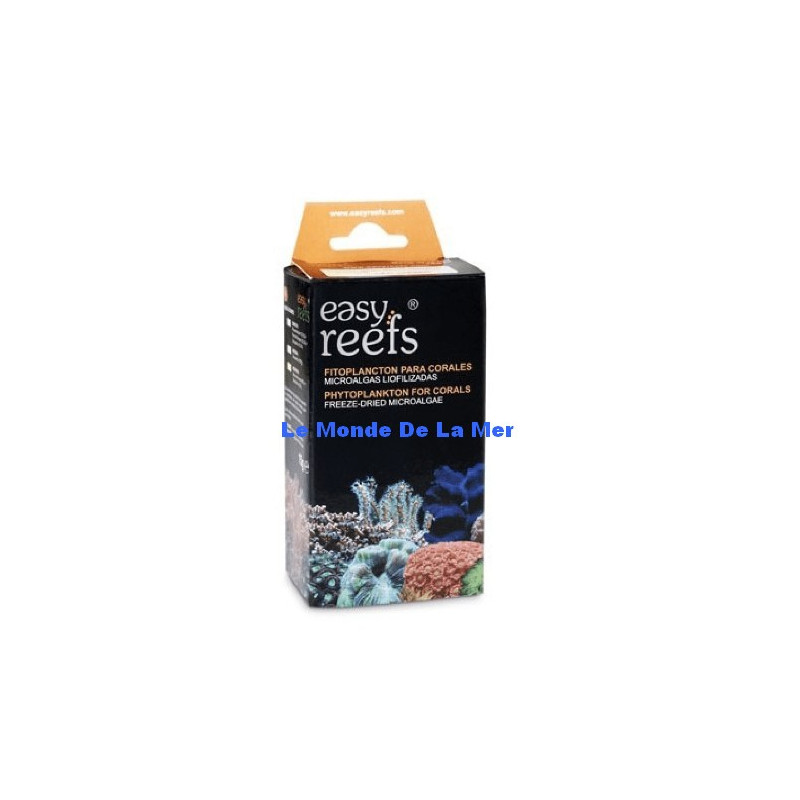
Easy reefs Corales 15gr - Le Monde De La Mer
ER02
New product
Easy Reefs® Artemia has been developed for the cultivation of artemia and other crustaceans.
9 Items
By buying this product you can collect up to 1 loyalty point. Your cart will total 1 loyalty point that can be converted into a voucher of 0,10 €.
More info
Phytoplankton, or marine microalgae, are microscopic plant cells found dispersed throughout the sea. Phytoplankton forms the base of the food chain in aquatic ecosystems, serving as food for larger organisms, such as zooplankton.
Marine phytoplankton is a very complete food source, containing vitamins, essential fatty acids, amino acids, carbohydrates, and proteins necessary for the development of various aquarium organisms.
Easy Reefs® is 100% freeze-dried marine phytoplankton, providing all the benefits of microalgae in an easy-to-use format. With Easy Reefs®, you can achieve excellent results in your marine aquarium. The microalgae used are rich in fatty acids, amino acids, and vitamins.
Easy Reefs® freeze-dried microalgae retain the same nutritional properties as those found alive in the marine environment.
|
Species |
|
fatty acids |
amino acids |
Vitamins |
|
|
|
Nannochloropsis gaditana |
|
EPA ARA, DHA, GLA
|
Isoleucine, Leucine, Lysine, Methionine, Phenylalanine, Proline, Threonine, Tryptophan, Valine, Alanine, Arginine, Aspartic Acid, Glutamic Acid, Glycine, Histidine, Tyrosine |
Folic Acid, Vitamin A, Vitamin B1 (thiamine), Vitamin B2 (riboflavin), Vitamin B3 (niacin), Vitamin B5 (pantothenate), Vitamin B6 (pyridoxine), Vitamin B12 (cobalamin), Vitamin E (tocopherol), Vitamin C (ascorbic acid) |
|
|
|
Tetraselmis chuii |
|
EPA ARA, |
|
|
||
|
Phaeodactylum tricornutum |
|
EPA |
|
Conservation. Store Easy Reefs® Artemia in a cool, dry, dark place. The storage temperature should not exceed 25°C. In summer, if temperatures are higher, it is recommended to store it in a climate-controlled room.
Once opened, it is very important to keep the biomass dry and in the dark. Avoid storing it in places with high humidity (condensation upon opening the jar causes the microalgae to absorb moisture and degrade). Keep the container tightly closed. Once opened, use preferably within 4 months.
The dosage depends on the density of the brine shrimp being fed. The consumption is 100 mg of Easy Reefs® Artemia per 10 liters of culture per day for the first 5 days (nauplii and metanauplii) and 200 mg of Easy Reefs® Artemia per 10 liters of culture per day from day 5 onwards (juvenile and adult brine shrimp). If, a few hours after adding Easy Reefs® Artemia, the water in the brine shrimp culture becomes clear (the microalgae have been ingested), then it is necessary to add more Easy Reefs® Artemia. Example for a 10-liter brine shrimp culture (maintain gentle aeration): Hatch the brine shrimp cysts according to the manufacturer's instructions. Once they have hatched, begin feeding with Easy Reefs® Artemia. Place 0.5 liters of seawater in the blender. Add 100 mg of Easy Reefs® Artemia (one level spatula) and follow the resuspension instructions. Remove 0.5 liters of water from the culture to make room for the new algae preparation. Slowly add the algae preparation back into the culture to avoid resuspending the sediment.
Resuspension Instructions
Easy Reefs® are freeze-dried marine microalgae and must be rehydrated before use. For proper rehydration, follow these steps:
Place the indicated amount of seawater in the blender.
Add the indicated amount of Easy Reefs®.
Let the Easy Reefs® microalgae rehydrate for one minute without shaking.
Blend on the lowest speed for one minute.
Add to the aquarium as directed.
One level scoop = 100 mg of Easy Reefs® microalgae.
Only prepare what you will use. It is not recommended to store any leftover product after resuspension. Even in the refrigerator, nutritional properties are lost due to oxidation.
Tetraselmis chuii
Due to its high content of antioxidants: Superoxide Dismutase, Catalase, and Glutathione Peroxidase.
Highly digestible.