
No products
Prices are tax included
Coral foods
- Basins
- Air Liquide
- Aquarium Hobby
- Dogs
- Cats
- Birds

Viewed products
-

Easy reefs Corales...
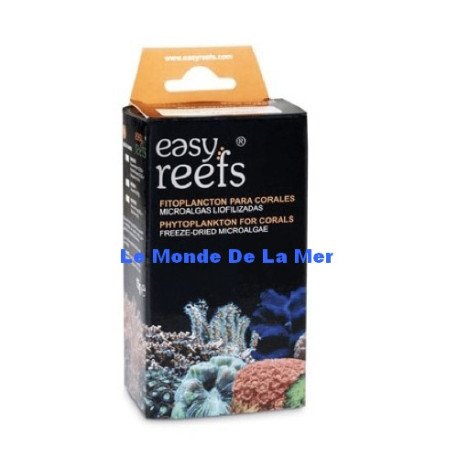
Easy Reefs® Corals has been developed...
 View larger
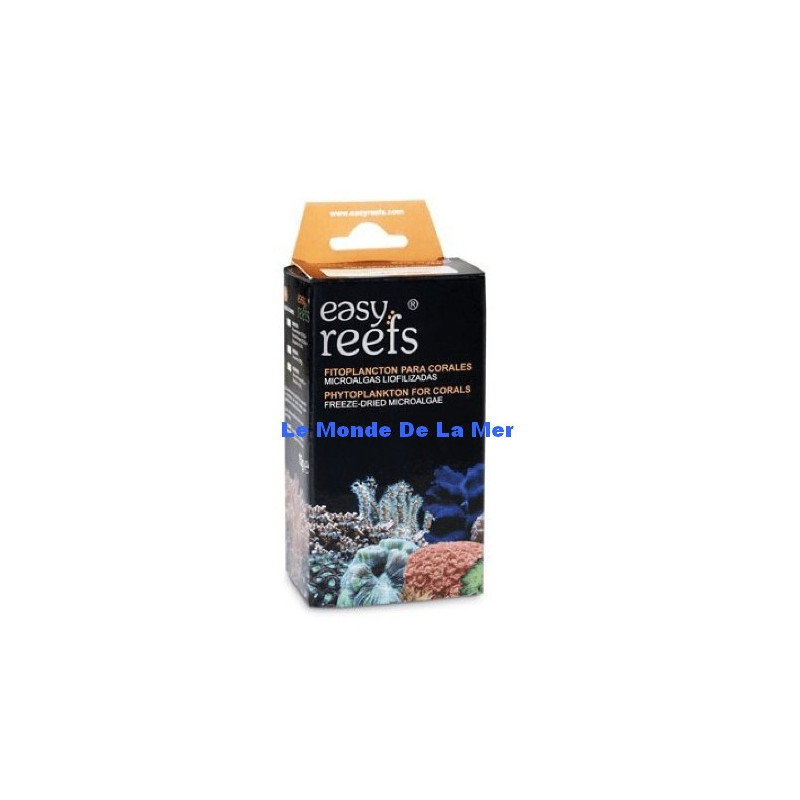
Easy reefs Corales 15gr - Le Monde De La Mer
ER01
New product
Easy Reefs® Corals has been developed to promote the growth of aquarium microfauna, thus contributing to the proper nutrition of corals.
10 Items
By buying this product you can collect up to 1 loyalty point. Your cart will total 1 loyalty point that can be converted into a voucher of 0,10 €.
More info
Phytoplankton, or marine microalgae, are microscopic plant cells found dispersed throughout the sea. Phytoplankton forms the base of the food chain in aquatic ecosystems, serving as food for larger organisms, such as zooplankton.
Marine phytoplankton is a very complete food source, containing vitamins, essential fatty acids, amino acids, carbohydrates, and proteins necessary for the development of various aquarium organisms.
Easy Reefs® is 100% freeze-dried marine phytoplankton, providing all the benefits of microalgae in an easy-to-use format. With Easy Reefs®, you can achieve excellent results in your marine aquarium.
Easy Reefs® freeze-dried microalgae retain the same nutritional properties as those found alive in the marine environment. The microalgae used are rich in fatty acids, amino acids, and vitamins.
Storage: Store Easy Reefs® Corals in a dark, dry, and cool place. The storage temperature should not exceed 25°C. In summer, if temperatures are higher, it is recommended to store it in a climate-controlled room.
Once opened, it is very important to keep the biomass dry and in the dark. Avoid storing it in places with high humidity (condensation upon opening the jar causes the microalgae to absorb moisture and degrade). Keep the container tightly closed. Once opened, use preferably within 4 months.
To ensure an adequate nutritional balance, three species of Easy reefs® microalgae are used (Phaeodactylum 33.3% + Nannochloropsis 33.3% + Tetraselmis 33.3%).
The dosage depends on the aquarium's organism load, but it is generally around 100 mg of Easy Reefs® Corals for a 500-liter aquarium once a day. For smaller aquariums, the dosage is 50 mg (half a spatula) of Easy Reefs® Corals per day.
It is recommended to add the freeze-dried microalgae near an internal circulation pump in the aquarium so that Easy Reefs® Corals is distributed evenly.
It is not necessary to stop the skimmer during feeding.
Example for a 500 L aquarium:
Place 0.5 liters of aquarium water in the blender.
Add 100 mg of Easy Reefs® Corals (one level spatula) and follow the resuspension instructions.
Resuspension Instructions
Easy Reefs® are freeze-dried marine microalgae and must be rehydrated before use. For proper rehydration, follow these steps:
Place the indicated amount of seawater in the blender.
Add the indicated amount of Easy Reefs®.
Let the Easy Reefs® microalgae rehydrate for one minute without shaking.
Blend on the lowest speed for one minute.
Add to the aquarium as directed.
One level scoop = 100 mg of Easy Reefs® microalgae.
Only prepare what you will use. It is not recommended to store any leftover product after resuspension. Even in the refrigerator, nutritional properties are lost due to oxidation.
Tetraselmis chuii:
Due to its high content of antioxidants such as Superoxide Dismutase, Catalase, and Glutathione Peroxidase.
Highly digestible for filter feeders and zooplankton.
Provides a high content of polysaccharides, polyunsaturated fatty acids (PUFAs), pigments, and other lipid compounds.
Phaeodactylum tricornutum:
Due to its high beta-glucan content, which improves the immune system of fish, making them more resistant to parasites and diseases.
Contains proteins, carbohydrates, and lipids, and is rich in antioxidants and carotenoids such as fucoxanthin, which helps process fat and prevents its accumulation in tissues.
Increases fatty acid oxidation and reduces the content of hepatic lipids (fatty liver), so common in fish.
High in EPA and DHA.
Nannochloropsis gaditana:
Provides a lipid profile very rich in EPA and ARA.
High in high-quality Omega-3 fatty acids (EPA).
Source of natural vitamins and antioxidants.